


N+ Univision
0.00.00 Reviews
App Specs
- Version
- 1.0.5 (308)
- Updated On
- License
- Free
- Downloads
- 50,000+
- Developer
- Tritón Comunicaciones S.A. de C.V.
- Categories
- News & Magazines
- Platform
- Android
Screenshots

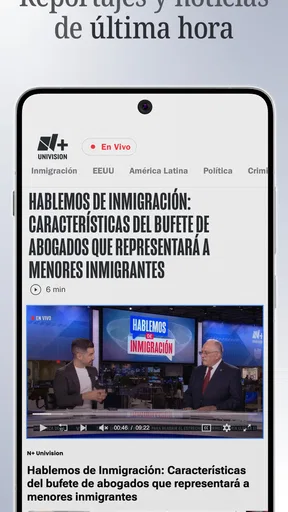
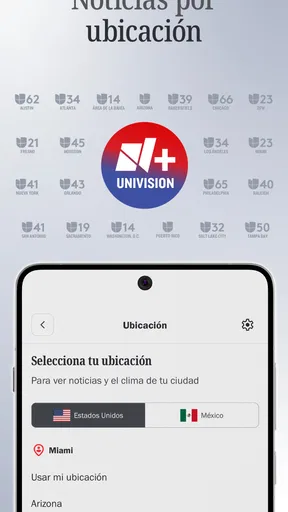
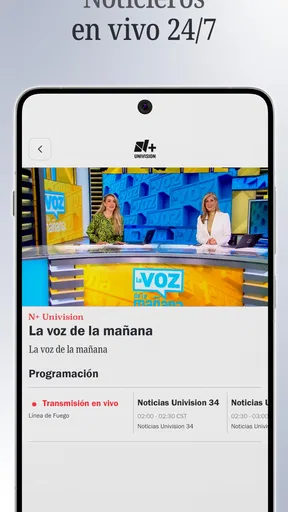

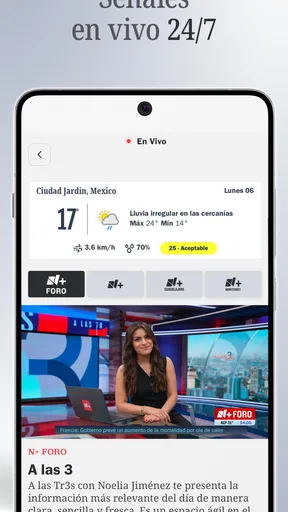

 Analysis by AppCompare
I spent time with N+ Univision as a mobile news and magazine app, and my first impression is that it is built for people who want several kinds of current content in one place rather than a single stream of headlines. It brings together news, articles, videos, podcasts, columns, and live television, so the experience changes depending on whether I have a spare minute, a longer commute, or enough attention to watch a full segment. That variety is its main appeal, but it also makes the quality of my connection an important part of how useful the app feels.
The app is free, aimed at Everyone, and comes from Tritón Comunicaciones S.A. de C.V. It belongs in the News & Magazines category and requires Android 7.0 or later. The current release is version 1.0.5 (308), while its presence has reached over 50 thousand installs. Those details make it accessible to a broad range of Android users, including people who are not using a recent phone. Still, compatibility alone does not guarantee a smooth news routine, so I paid particular attention to what happens when the network is strong, weak, or changing.
How the connection changes the reading and viewing experience
I look at connection quality as more than a streaming concern: it shapes which format is worth choosing and how much attention I can give a story. This section focuses on matching reading, listening, and viewing to the moment, then follows that choice through an ordinary day to see where the handoffs feel useful and where they add friction.
When a good connection makes the app feel most complete
The strongest side of this app appears when I can move freely between formats. I might begin with a written article, switch to a video for a visual explanation, and then choose a podcast when I no longer want to keep looking at the screen. Live TV adds another option for following coverage as it unfolds. This combination gives N+ Univision more range than a basic headline reader, but it also means the app is not just delivering text. Much of its appeal depends on media loading properly and continuing without interruption.
That matters during a breaking-news moment. A text article can be useful when I need the essential facts quickly, while a video or live broadcast can provide a stronger sense of what is happening. I found that the app makes more sense when I treat these formats as different tools instead of expecting every story to work equally well in each one. Articles suit quick checking and quiet reading; video is better when images or presentation add context; podcasts fit listening while doing something else; live TV is the choice when immediacy matters most.
There is a practical trade-off here. A single app with several formats reduces the need to jump between separate services, but it can also make the experience feel busier than a focused news reader. If I only want short written updates, the extra media choices may feel like visual and navigational noise. If I want a richer news session, however, the mixture is genuinely useful. The app is at its best for someone who changes how they consume news throughout the day.
Using it in ordinary mobile situations
My most realistic use case is a fragmented day. In the morning, I can scan articles before leaving home. Later, I can listen to a podcast while preparing lunch, provided the connection remains dependable and I do not need to watch the screen. In the evening, I may have enough time for a video or live TV. N+ Univision fits this pattern better than an app designed around only one format because it follows the changing amount of attention I have available.
Worth Reading Before You Choose

EA SPORTS FC Mobile 26 Is a Bigger Football Game, but It Takes Time

Flipboard Shows What News Apps Must Do Beyond the Feed

Switching to Android Auto Means Rethinking Your Driving Routine

Google Calendar Makes a Crowded Week Easier to Manage

Ludo King Makes the Most of the Minutes Between Plans

Baby Panda World Brings Quick Play to Modern Phones, but Its Game Library Feels Busy
On a crowded commute, the distinction between reading and watching becomes especially important. A written article is usually the safer choice when I am standing, moving, or dealing with distractions. Video requires a stable enough connection to avoid pauses and also demands more attention, while live television is less forgiving if the signal fluctuates. Podcasts are more convenient for screen-free moments, but I would not assume that every piece of content is equally practical for listening. I choose the format first, then decide whether the current network can support it.
For travelers, the app deserves a little planning. A free news app can still consume mobile data when it serves video, audio, or live programming. I would use it confidently on Wi-Fi, then be selective on cellular data: read first, start longer media only when the connection and data allowance make sense, and avoid leaving live TV running in the background. This is not a criticism unique to N+ Univision; it is simply more relevant here because the app combines text with several connection-heavy formats.
What happens when the network becomes unreliable
The most noticeable limitation is that the app’s richer features are vulnerable to ordinary mobile problems. A weak signal, an overloaded public network, or a change from Wi-Fi to cellular can interrupt the rhythm of a session. Text content may still be the most practical route in those moments, but I would not build my routine around uninterrupted access to video, podcasts, or live TV when I know the connection will be unstable.
This affects the way I judge the app. A short pause in a video is more frustrating than a slightly slow article, and an interruption during live coverage can make me miss the part I opened the stream to see. The app therefore feels more dependable as a broad news hub than as a guaranteed replacement for a television broadcast or a dedicated audio player. When continuity matters more than variety, a specialized alternative may be the better choice.
My recovery habit is simple: if media stalls, I stop trying to force the same format and switch to an article or another section. I also reopen the content only after checking whether the phone has moved between networks. That small change avoids repeatedly restarting a stream under the same poor conditions. It is one of the less obvious advantages of having multiple formats in one app: when one path is inconvenient, another may still be useful.
Making a data-conscious news routine
I would not use every feature in the same way on a limited mobile plan. Articles are the natural starting point because they let me catch up without committing to a longer stream. I reserve video and live TV for Wi-Fi or for moments when I specifically need visual coverage. Podcasts can be convenient, but audio still depends on a connection while it is playing, so I would treat them as a deliberate choice rather than something to leave running without thought.
A useful workflow is to separate “checking the news” from “watching the news.” For a quick update, I open the written material and stop once I have the information I need. For deeper context, I choose one video, podcast, or live session instead of moving repeatedly between all three. This keeps the app from turning a two-minute check into an unplanned media session, and it makes my data use easier to control without giving up the app’s broader selection.
Another practical point is attention, not just bandwidth. Live TV can encourage passive viewing, while columns and articles invite slower reading. I prefer to use the app intentionally: headlines and articles during short breaks, podcasts when my hands are occupied, and video or television when I can give them proper attention. That approach makes the collection of formats feel organized rather than overwhelming.
How it compares with familiar alternatives
Compared with a traditional newspaper app, N+ Univision feels more flexible because it is not limited to written reporting. The inclusion of video, podcasts, columns, and live television gives it a broader media identity. A newspaper-style alternative may be calmer and easier for readers who want to focus on text, especially when connectivity is inconsistent or data use is a concern.
Compared with a standalone video platform, this app is more focused on news consumption rather than general entertainment. That can be an advantage when I want a direct route to news-related material, but a dedicated video service may offer a more mature viewing workflow for people who mainly watch rather than read. The same comparison applies to podcast apps: a specialized audio app may be preferable for listeners whose main priority is managing a large listening routine, while N+ Univision is more convenient for someone who wants podcasts alongside other news formats.
Live television is another useful point of comparison. A dedicated broadcaster’s service may be the stronger option for viewers who want television first and everything else second. N+ Univision makes more sense for me when live coverage is one part of a wider news visit. I can move from a written explanation to a broadcast without leaving the same news environment, but I should not confuse that convenience with the focused controls of a service built only around live viewing.
Who will get the most from it
I would recommend this app to readers who dislike choosing between separate news, video, podcast, and television applications. It works especially well for people whose schedules change throughout the day and who want the freedom to match content with their available attention. It is also a sensible option for Android users on older supported devices who want a free way to explore several news formats from one developer.
The app is less suitable for someone who wants a quiet, text-only reading experience, a carefully managed podcast library, or uninterrupted live viewing under difficult network conditions. It may also be a poor fit for users who need their news routine to work predictably while traveling through areas with weak service. In those cases, a more specialized app or a service designed around the preferred format may feel less frustrating.
Questions I would ask before installing
One natural question is whether it costs anything to try. The app is free, which lowers the barrier to testing it, although free access does not remove the practical cost of mobile data when using streaming formats. I would install it over Wi-Fi, explore the balance between articles and media, and then decide which sections deserve regular use on cellular service.
Another question is whether an older Android phone can run it. The minimum requirement is Android 7.0, so the app is not restricted to only the newest devices. Performance can still vary with the phone itself and with the quality of the connection, especially when moving between media types, but the operating-system requirement is reasonably broad.
Readers may also wonder whether it is appropriate for a family device. Its content rating is Everyone, so it is presented for a general audience. That does not mean every news topic will suit every child, but it does make the app less specialized than services intended for mature audiences.
Finally, users often want to know whether one app can replace every other news service. In my view, N+ Univision can become a convenient central place for mixed-format news, but I would not automatically make it my only source. Its strength is variety and quick switching; a focused newspaper, podcast, video, or television app may still be better when I need depth, a specialized workflow, or the most stable experience in one format.
My connectivity verdict
N+ Univision is most convincing when I have a reasonably reliable connection and want news to adapt to my situation. I can read when time is short, listen when the screen is inconvenient, watch when visual context helps, and turn to live television when immediacy is the priority. That range is more meaningful than a long feature list because it changes how I use the app across a normal day.
Its main weakness is equally clear: the richer the format, the more the experience depends on network conditions and sensible data habits. I would not choose it solely for uninterrupted streaming, nor would I recommend treating every session as a passive live-TV replacement. Instead, I see it as a flexible news companion whose best feature is the ability to change formats without changing apps.
Overall, I would recommend giving it a try if you want a free, general-audience news app from Tritón Comunicaciones S.A. de C.V. and you regularly move between reading, listening, watching, and live coverage. The key is to use the format that matches both your attention and your connection. With that expectation, N+ Univision feels practical and versatile; without it, the network-dependent parts can make the experience less consistent than a dedicated alternative.
Pros
- Live access to Univision news
- sports
- novelas
- and entertainment
- Includes Spanish-language content from trusted Univision programs
- Personalized recommendations make finding shows easier
- Supports casting to compatible TVs and streaming devices
- Useful companion for viewers with an active TV provider
Cons
- Many features require signing in with a participating TV provider
- Content availability can vary by location and licensing rights
- Some videos may include frequent advertisements
- Streaming quality depends heavily on your internet connection
- The app may use significant mobile data during extended viewing
FAQs for N+ Univision
What is N+ Univision, and what can I watch with it?
N+ Univision is a streaming and news-focused app connected with Univision’s Spanish-language content. Depending on your location and the current catalog, it may provide live news, breaking stories, video reports, entertainment coverage, sports-related updates, and selected on-demand programs. The available content can vary by country, licensing agreements, and whether you sign in through an eligible television or streaming provider.
Is N+ Univision free to download and use?
The application is generally free to download, but access to every feature or video is not necessarily free. Some news clips and articles may be available without an account, while live channels, premium programming, or extended on-demand content can require a participating TV provider, subscription, or authenticated Univision account. Before downloading, check the listing and in-app requirements for your region to understand possible costs.
Do I need a Univision TV provider account to use the app?
An account is not always required for browsing headlines, reading selected articles, or watching certain publicly available clips. However, authentication may be necessary for live television, full episodes, exclusive programming, or other restricted content. Provider support can differ by country and subscription package, so users should review the sign-in screen and supported providers before assuming that their existing television credentials will work.
Can I watch N+ Univision outside the United States?
Availability outside the United States depends on regional licensing, distribution rights, and the version of the service offered in your market. Some features may work internationally, while particular videos, live streams, or programs can be blocked because of location restrictions. The app may use your network location to determine access, so downloading it from another country does not guarantee that the complete catalog will be available.
Does N+ Univision support live streaming, captions, and mobile devices?
The app is designed for viewing on compatible Android and iOS smartphones and tablets, although supported operating-system versions can change over time. Live streaming may be offered for selected channels or events, while captions, audio options, and video quality can depend on the individual program. A stable Wi-Fi or mobile-data connection is recommended, and streaming over cellular data may consume a significant amount of your allowance.


